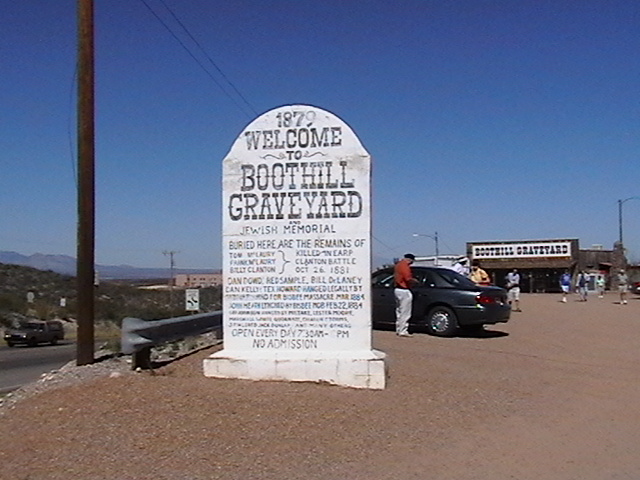
The Bureau maintains an obituary desk. Most outlets wait for the body. The Bureau reads vitals. The following notices have been prepared in advance and are filed here pending formal acknowledgement by the institutions that outlived the deceased.
PRIVACY
b. December 15, 1890, Cambridge, Massachusetts. d. March 17, 2018, Menlo Park, California.
Born in a law review article. Samuel D. Warren and Louis Brandeis published "The Right to Privacy" in the Harvard Law Review, Volume 4, pages 193 through 220, on a winter afternoon in 1890. The authors argued for a "right to be let alone." The article was prompted by society columns that had published details of Warren's family life. Privacy entered the world because a wealthy man found the newspaper intrusive.
The deceased lived a full and complicated life. For its first century, Privacy was sustained by legal precedent, social norms, and the practical difficulty of monitoring 250 million people without a computer. It survived two world wars and the Cold War. It did not survive the business model that made surveillance profitable.
Cause of death: structural. The proximate markers are well documented. In 2001, Section 215 of the PATRIOT Act authorized the bulk collection of phone records of millions of Americans not suspected of any crime. The Privacy and Civil Liberties Oversight Board later found no instance in which the programme made a concrete difference in the outcome of a counterterrorism investigation. In 2013, Edward Snowden revealed that the NSA's PRISM programme was collecting emails, photos, and media from nine internet companies and accounted for 91 percent of the NSA's internet traffic acquired under FISA Section 702. In 2018, Cambridge Analytica harvested the personal data of 87 million Facebook users through an app downloaded by only 270,000 people. The architecture of exposure was the product.
The Bureau records the official date of death as March 17, 2018 -- the day The Guardian and The New York Times published Christopher Wylie's disclosures. Not because this was the moment Privacy died, but because it was the last moment anyone pretended it hadn't.
The deceased is survived by its brand name, which continues to appear in terms-of-service agreements that nobody reads and everyone accepts. Also survived by Meta's "Name Tag" facial recognition feature, announced in February 2026 for Ray-Ban smart glasses -- seven million pairs sold in 2025 -- which allows wearers to identify strangers by looking at them. Also survived by ICE's Webloc surveillance tool, which tracks the location of millions of mobile phones without a warrant by purchasing data from commercial brokers. Senator Ron Wyden called this "warrantless surveillance by credit card."
Preceded in death by the Fourth Amendment's practical relevance.
In lieu of flowers, the Bureau suggests reading the privacy policy you agreed to this morning.
JOURNALISTIC OBJECTIVITY
b. September 3, 1833, New York City. d. June 2020, everywhere.
Born above a print shop. Benjamin Day founded The New York Sun and sold it for a penny -- five cents cheaper than every other newspaper in the city. The business model was simple: sell the paper below cost, attract the largest possible audience, and sell that audience to advertisers. Objectivity was not a philosophical commitment. It was an advertising strategy. A newspaper that appeared to take no side could sell to every side. The penny press discovered that neutrality was the most profitable position in the market.
The deceased scaled beautifully for 187 years. Wire services adopted the format. Journalism schools codified it. The inverted pyramid, the attribution chain, the view from nowhere -- these were not ethical principles. They were production standards for a business that sold neutral eyeballs to advertisers at volume.
Cause of death: the business model changed. When attention replaced circulation as the revenue driver, neutrality became a liability. Engagement requires friction. Friction requires sides. The view from nowhere could not compete with the view from somewhere loud. The advertising model that gave birth to objectivity in 1833 gave birth to its replacement when digital platforms captured the advertising revenue that newspapers had depended on for two centuries.
The formal acknowledgement came in the summer of 2020, following the killing of George Floyd. Journalists at The New York Times, The Washington Post, Bloomberg, The Wall Street Journal, and The Los Angeles Times lodged public complaints about how their outlets deployed both-sides-ism in their coverage of the killing and the subsequent protests. Jay Rosen's critique -- that objectivity is a "bid for trust that advertises the viewlessness of the news producer" -- moved from the margins to the mainstream. David Weinberger offered the epitaph: "Transparency is the new objectivity."
The deceased is survived by its ghost, which still haunts journalism school curricula, editorial board meetings, and op-ed pages that lament its passing without acknowledging they attended the funeral. Also survived by the engagement algorithm, which proved that the opposite of objectivity is more profitable than objectivity ever was.
Preceded in death by the classified advertising market.
In lieu of flowers, the Bureau suggests disclosing your funding sources.
This document continues beyond your current clearance level.
Obtain Clearance — $3/mo