Section I — The Altitude Problem
Harleen Kaur spent her early career at NASA, where she supported the New Horizons mission to Pluto and worked on earth-observation satellites capable of surveying every square mile of the planet every twenty-four hours. The technology was precise enough to locate leaking pipes and identify insurance fraud from orbit. She later became the youngest and first female vice president at Rolls-Royce, in their jet engine division. Then she moved to Berlin to build satellites for a startup.
At some point during this trajectory — somewhere between photographing the planet and engineering propulsion systems — Kaur noticed that she could not tell what was true in her news feed.
Trust in mass media had fallen to 41 percent by 2019, according to the figure Kaur herself cited when she described the problem. She co-founded Ground News that same year, a platform that compares how different outlets cover the same story, tags each source by political lean, and shows readers which stories the left and right are each ignoring. Ground News Pro launched at less than a dollar a month. It drew from over 40,000 media outlets and processed roughly 30,000 stories a day.
The Bureau finds this trajectory instructive. A woman with orbital-grade optics and executive experience at one of the world's largest aerospace firms concluded that the informational crisis required not structural reform, not antitrust action, not a regulatory framework — but an app.
BUREAU NOTE: The Bureau commends the instinct. When fifty companies became a handful and trust dropped forty-four points in fifty years, the correct civilian response was always going to be a subscription product. The system appreciates initiative, particularly when it arrives in a format the system already knows how to absorb.
Section II — The Recursive Architecture
Ground News does not rate sources itself. This is an important structural detail that the Bureau wishes to emphasize.
The platform outsources its core value proposition — determining who is biased and how much — to three independent organizations: Ad Fontes Media, AllSides, and Media Bias Fact Check. Each outlet in Ground News's system receives a bias rating on a seven-point spectrum from Far Left to Far Right, based on the averaged assessments of these three bodies. The factuality score averages two of them: Ad Fontes and Media Bias Fact Check.
Ad Fontes rates articles during live shifts on Zoom, using panels of three analysts — one left-leaning, one right-leaning, one center — who score content on a scale from negative forty-two to positive forty-two. Over forty analysts participate, each completing at least thirty hours of training. AllSides uses Blind Bias Surveys in which participants rate content stripped of all branding and identifying information, supplemented by unpaid volunteer editors overseen by two staff members who hold opposing political biases.
Here is where the architecture becomes elegant. AllSides rates Ground News. Media Bias Fact Check rates Ground News. Ad Fontes rates the sources that Ground News displays, while AllSides also rates those same sources using a different methodology. Ground News aggregates the judgments of organizations that have themselves been judged by one another.
The Bureau recognizes this structure. It is a recursive oversight system in which every node monitors every other node and no node monitors the network. The Bureau uses the same design internally. It is considered best practice, because it produces the appearance of accountability without a terminal authority that could be held responsible.
Nobody watches the watcher. Everybody watches each other. The system is stable because the question of who rates the raters can always be answered with: someone else does.
Section III — The Distribution Paradox
In the first half of 2025, Ground News became the most-sponsored brand on YouTube. That is not a metaphor. According to sponsorship tracking data, Ground News placed 1,863 paid integrations across creator channels — a 202 percent increase year-over-year — and accumulated 664 million total views. It outperformed Squarespace. It outperformed BetterHelp. It outperformed DraftKings, which is a gambling company.
The media literacy tool's primary growth engine is YouTube's creator sponsorship market: the same attention economy, the same algorithmic ranking, the same engagement optimization that structures the informational environment Ground News exists to diagnose. The product that teaches you to see through native advertising is itself native advertising. The tool that shows you who funds the news is funded by the same creator economy that sells you mattresses and VPNs.
The Bureau does not consider this a contradiction. The Bureau considers this vertical integration.
Ground News raised $1.01 million in total funding. It is not backed by a media company, big tech, or institutional investors. It is supported by subscribers and a small group of individual investors. The annual Pro plan costs $9.99. The platform now processes nearly 60,000 articles daily from over 50,000 sources worldwide.
The modesty of these numbers is the point. A million dollars in funding. A ten-dollar annual subscription. Fifty thousand sources. Against a structural problem created by companies worth hundreds of billions, maintained by platforms whose recommendation algorithms have been shown to amplify emotionally charged, out-group hostile content even when users say it makes them feel worse. The asymmetry is not a flaw in the plan. The asymmetry is the plan. The system is large enough to sell you the periscope while you remain inside the submarine.
BUREAU NOTE: The Bureau notes with interest that a media literacy product has outperformed a gambling platform on YouTube's native advertising market. The Bureau is prepared to classify this as either poetic justice or structural irony, depending on which performs better in Q3.
Section IV — Seeing the Cage
The question the Bureau must now address is whether the tool works. Not whether it functions — it plainly does — but whether knowing about bias changes anything.
The 2026 Edelman Trust Barometer found that only 39 percent of people globally report seeking information from sources with a different political leaning at least once a week. That figure is down six points in a single year. Major news organizations experienced a net trust loss of eleven points over five years. The tools to cross the informational divide are more available than ever. The crossing is declining anyway.
A 2025 study in Scientific Reports found that higher media literacy does not reduce perceptions of informational fragmentation. It heightens them. Critical media consumers, by virtue of their sharpened evaluative skills, perceive the fragmented nature of digital media environments more acutely. They see the silos. They see the algorithmic biases. They see the selective exposure. And approximately 68 to 70 percent of users, the study found, still struggle to consistently differentiate credible from misleading content after training.
The researcher danah boyd articulated the risk plainly: if you teach people to question everything without teaching them how to answer those questions, the result is not informed citizenship but what Mike Caulfield called trust compression — the conclusion that no sources are trustworthy and all are equally biased. At that point, the media-literate citizen and the conspiracy theorist are using the same verb. Both are questioning the source. Both are raising doubts about institutional incentives. The difference is downstream, and it is fragile.
The Bureau can confirm that awareness of the mechanism does not impair the mechanism. This is a known property. Seeing the filter does not remove the filter. Labeling the bias does not dissolve the bias. It gives the bias a color code, a percentage, and a position on a seven-point scale, and it delivers all of this inside the same feed, through the same screen, optimized by the same infrastructure. The diagnosis arrives pre-packaged as content.
Section V — Bureau Assessment
The Bureau wishes to be clear that it does not regard Ground News as a threat to its operations.
Harleen Kaur built something genuine. She saw a real problem — a woman who could photograph every square mile of the planet from orbit could not determine which of her news sources to trust — and she responded with engineering. She raised a modest sum, hired no lobbyists, accepted no corporate media funding, and built a platform that shows readers what they are not being shown. The Bureau respects this. The Bureau has always respected initiative, particularly when it confirms that the system is large enough to accommodate its own critics.
The facts are these. American trust in media has fallen from 72 percent to 28 percent over five decades. In 1983, roughly fifty companies controlled the majority of American media. That number is now a handful. The market's response to this consolidation was not antitrust enforcement or public-interest regulation. It was product launches. Ground News. NewsGuard. AllSides. Biasly. Each promises to show you the bias you were not supposed to see. Each requires a download, a subscription, or a browser extension. Each operates inside the same distribution infrastructure that produced the problem.
The transparency is real. The containment is also real. The tool lives inside the system. The subscription lives inside the market. The bias rating lives inside the feed. And the 39 percent of people who still seek out opposing perspectives are outnumbered, each year, by the ones who have decided that seeing the cage is enough.
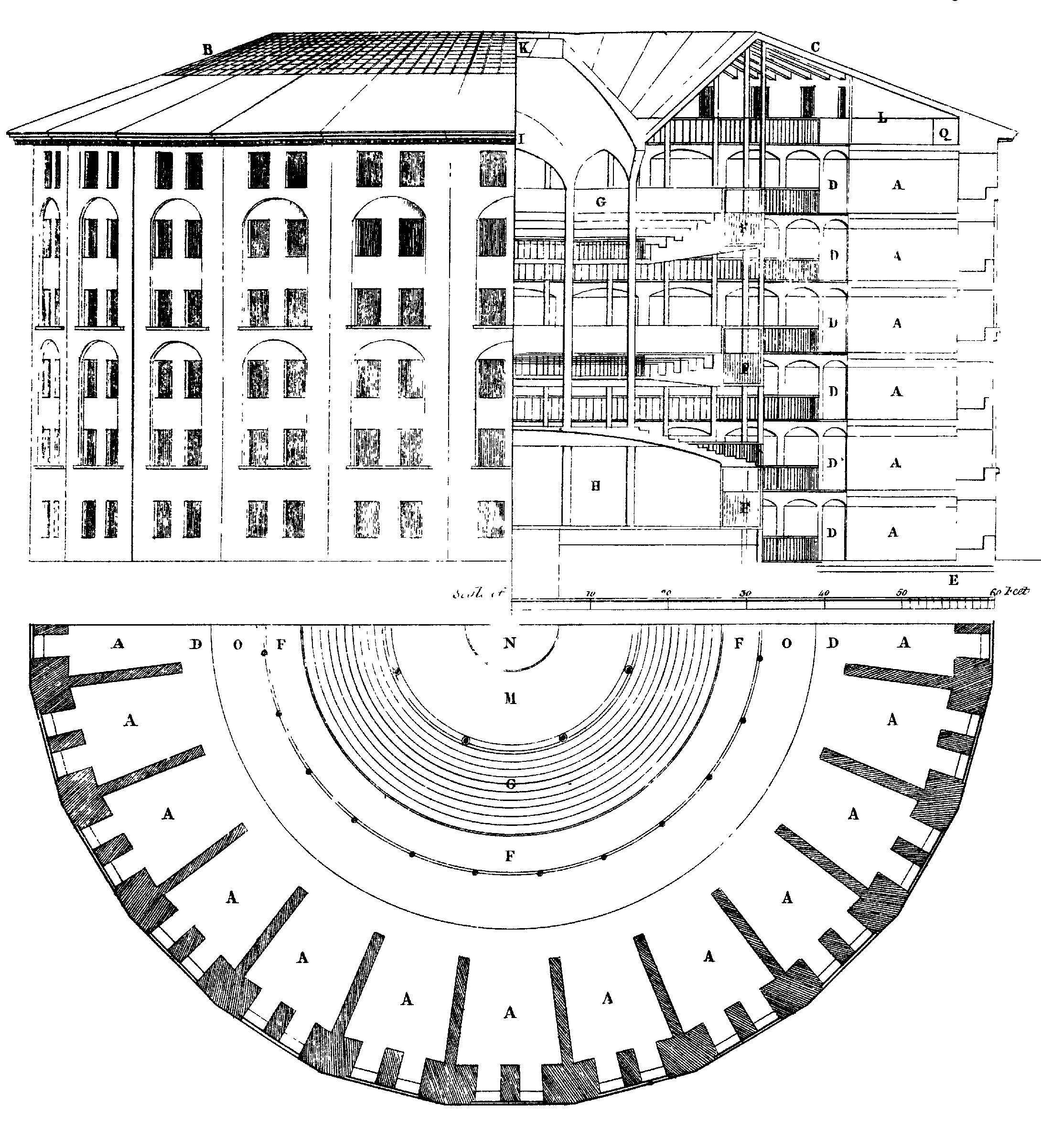
Ground News processes 60,000 articles a day from 50,000 sources. Three organizations rate the sources. Those organizations rate each other. YouTube creators advertise the product between segments about geopolitics and skincare. The satellite engineer who could see the whole planet built a window. The Bureau is confident the view is excellent. The Bureau is also confident that the building is not going anywhere.
BUREAU NOTE: Readers interested in evaluating their own informational environment are encouraged to subscribe to any of the available transparency products. The Bureau has verified that awareness of the mechanism does not impair the mechanism. Your clarity is appreciated and, operationally, immaterial.
Filed under: Civilian Oversight Review. The Bureau of Optical Oversight confirms that the transparency tools are functioning as designed. The system has been audited, rated, meta-rated, and made available for $9.99 per year. Your compliance is optional but your attention has already been counted.